
Connecticut Heat Pump Rebate 2026
CT Rebate for Heat Pump in 2026: See the Amount, Rules, and Next Step Before You Install.
Most homeowners lose money by installing first and sorting rebate paperwork later. Use this page to see the current 2026 rebate paths, match your scenario, and avoid the mistakes that block payouts.
Last updated: September 4, 2026
CT rebate for heat pump: quick answer
For a 2026 Connecticut heat pump project, many homeowners start with the Energize CT Residential Energy Optimization path, currently published for qualifying installations occurring on or after September 1, 2026 as starting at $1,500 per ton up to $10,000 for qualifying replacements or integrated projects. Standard Residential Air Source scenarios are commonly listed at $250 per ton up to $2,500, and the Smart-E heat pump financing offer is listed at 1.99% for a 5-year term through December 31, 2026 for qualifying projects up to $25,000.
- Replacing oil, propane, natural gas, or electric resistance: check Energy Optimization first.
- Replacing an existing heat pump or adding comfort to new space: check Residential Air Source.
- Planning to finance the project: confirm Smart-E lender participation and pre-verification before installation.
Latest August 2026 update
Smart-E Loan special offer is now part of heat pump planning
The August heat pump newsletter highlights the Smart-E Loan special offer for qualifying Connecticut heat pump projects: 1.99% financing on a 5-year term, a $25,000 special-offer loan cap, no prepayment penalties, HPIN contractor requirements, and rebate verification before financing is treated as ready.
2026 Connecticut Heat Pump Rebate Snapshot
| Program path | 2026 published amount | Best-fit scenario | Published window |
|---|---|---|---|
| Residential Energy Optimization | On/after 09/01/2026: starting at $1,500/ton, up to $10,000 | Replacing oil, propane, natural gas, or electric resistance heat | 01/01/2026 to 12/31/2026 |
| Residential Air Source | $250/ton, up to $2,500 | Replacing an existing heat pump, cooling-only, or adding conditioned space | 01/01/2026 to 12/31/2026 |
| Smart-E Heat Pump Financing | 1.99% special rate for 5-year heat pump loans up to $25,000 | Approved Energize CT heat pump rebate projects | 08/01/2026 to 12/31/2026 (published special offer) |
| Federal Section 25C | Applied through tax year 2025 service dates | Qualifying property placed in service by 12/31/2025 | Not generally applicable to 2026 service dates |
Last verified against primary program pages on September 4, 2026. Program windows and terms can change by update cycle.
Common 2026 CT heat pump rebate scenarios
Use these as planning examples before you request quotes. Final rebate approval depends on the exact address, utility account, equipment, installer status, and project documentation.
| Homeowner situation | Path to check first | Published planning math | Verify before installation |
|---|---|---|---|
| Replacing oil, propane, natural gas, or electric resistance heat | Residential Energy Optimization | For installs on or after September 1, 2026: starting at $1,500/ton, capped at $10,000 | Current fuel, HPIN contractor, qualified equipment, AHRI tonnage, and integrated-control requirements. |
| Replacing an existing heat pump | Residential Air Source | $250/ton, capped at $2,500 for qualifying projects | Equipment listing, invoice details, and whether the project is replacement rather than primary-fuel displacement. |
| Adding heat to a finished basement, bonus room, or other unconditioned space | Residential Air Source | $250/ton, capped at $2,500 when the added-space scenario qualifies | Space history, heating use, equipment match, and the documentation needed for final submission. |
| Financing a qualifying heat pump project | Smart-E heat pump special offer | 1.99% for a 5-year term, up to $25,000 under the published special offer | Rebate approval or reservation letter first, lender participation, HPIN status, and project amount. |
If another page shows $1,000 per ton, check the current official offer
Many Connecticut rebate guides were written before the latest 2026 update cycle. Some pages and older program text still reference a $1,000-per-ton Energy Optimization amount, while the current official offer summary we checked on September 4, 2026 lists qualifying installations on or after September 1, 2026 as eligible for starting incentives at $1,500 per ton up to $10,000. Treat older numbers as a reason to re-check the live program page and your rebate reservation details before signing.
Which Connecticut rebate path usually applies to your home?
Oil, propane, gas, or baseboard today
Most homeowners in this scenario check the Energy Optimization pathway first because that is where larger per-ton incentives are commonly published.
Replacing an older heat pump
This often falls into the Residential Air Source path, where published incentive levels are usually lower, but still meaningful when planned correctly.
Adding comfort to new or unconditioned space
Garage bonus rooms, finished basements, and additions often follow the air-source path with strict equipment and documentation requirements.
Rebate-killing mistakes to avoid before installation
- Installing before required rebate registration/approval is complete.
- Assuming one rebate path when your fuel scenario qualifies for another.
- Missing AHRI references, model numbers, or integrated-control details on invoice paperwork.
- Choosing equipment not listed on the qualified product path used for submission.
- Treating old federal-credit assumptions as current 2026 tax guidance.
Fastest way to maximize savings in Connecticut
- Run your profile in the CT Upgrade Finder and identify your likely rebate path.
- Confirm utility territory, equipment match, and registration requirements before signing.
- Collect contractor scope, AHRI details, and invoice fields in one rebate-ready packet.
- Layer financing only after confirming incentive pathway and project timeline.
The projects that win in CT are not just about equipment quality. They win because timing, documentation, and pathway selection are handled correctly from day one.
Real system examples homeowners compare in Connecticut
These Connecticut heat pump installation photos show real Mitsubishi cold-climate setups homeowners review when comparing rebate eligibility, mechanical code clearances, and long-term operating cost.
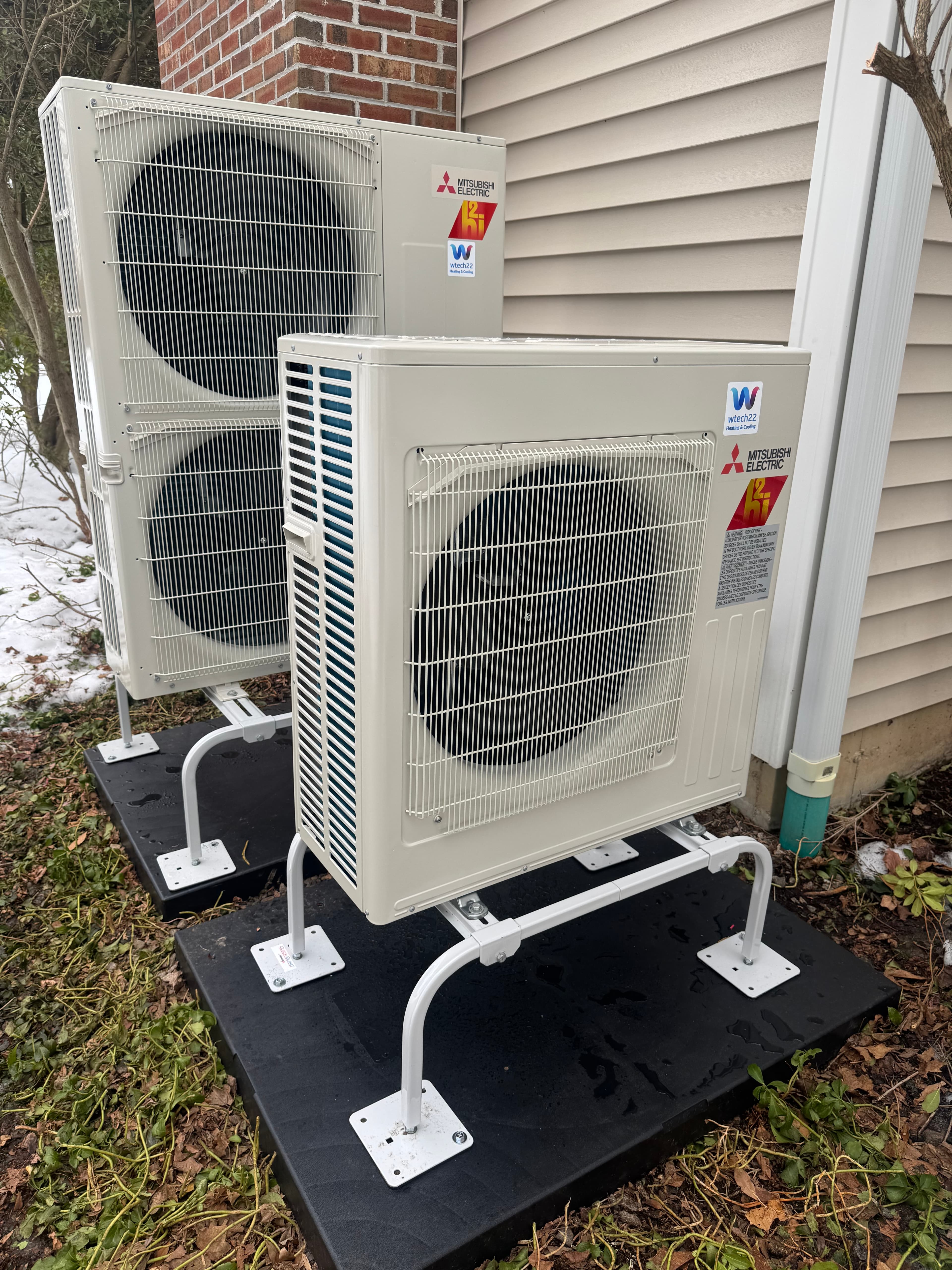
Connecticut Heat Pump Install with Service-Clearance Planning
Elevated outdoor placement supports winter drainage and snow conditions while preserving manufacturer service-side access and common Connecticut mechanical clearance expectations.
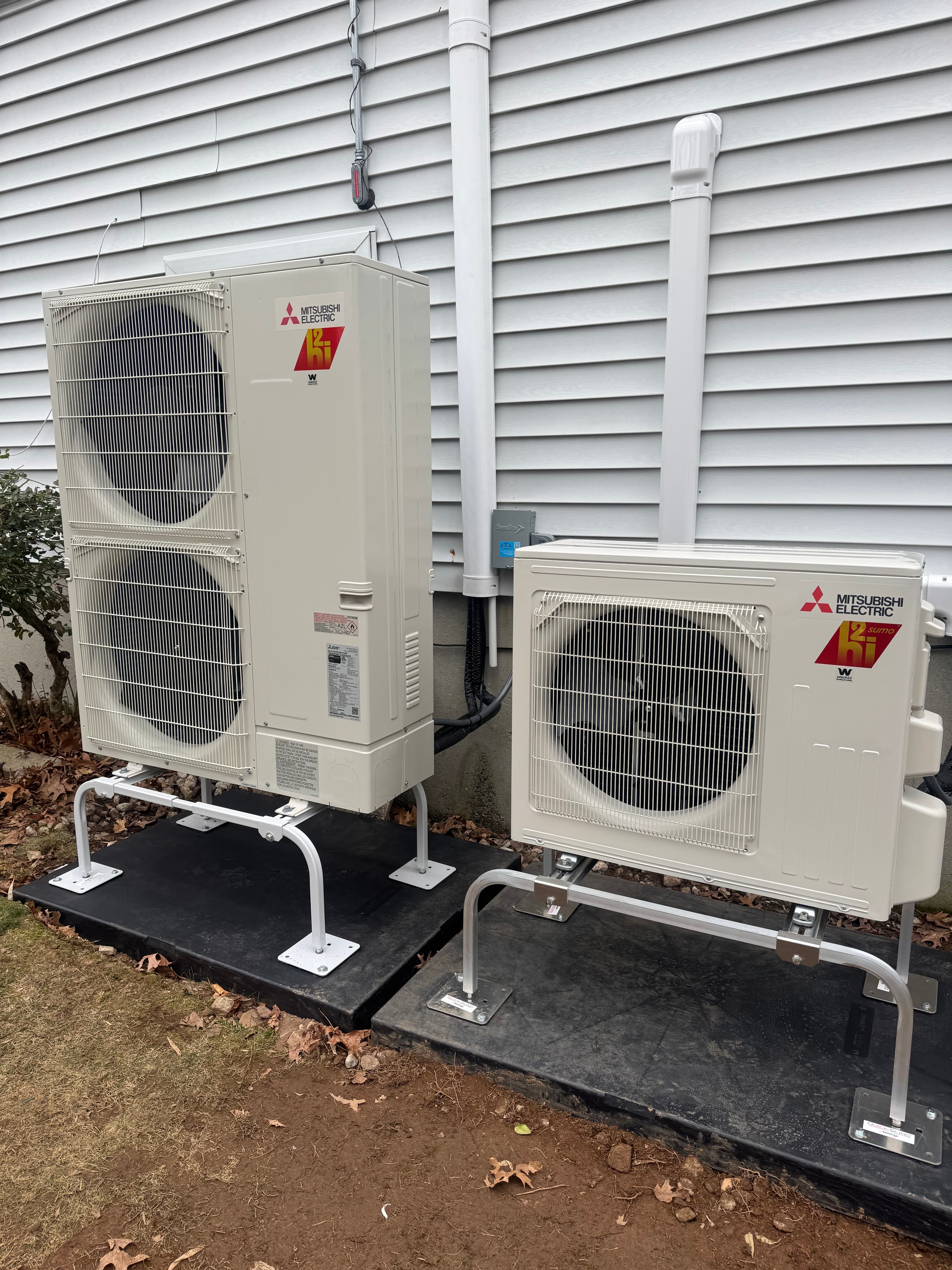
Oil-to-Heat-Pump Conversion with SlimDuct Line-Set Protection
Refrigerant piping and control wiring can be routed in SlimDuct line-hide to help protect insulation from UV and physical damage while keeping a cleaner exterior finish.
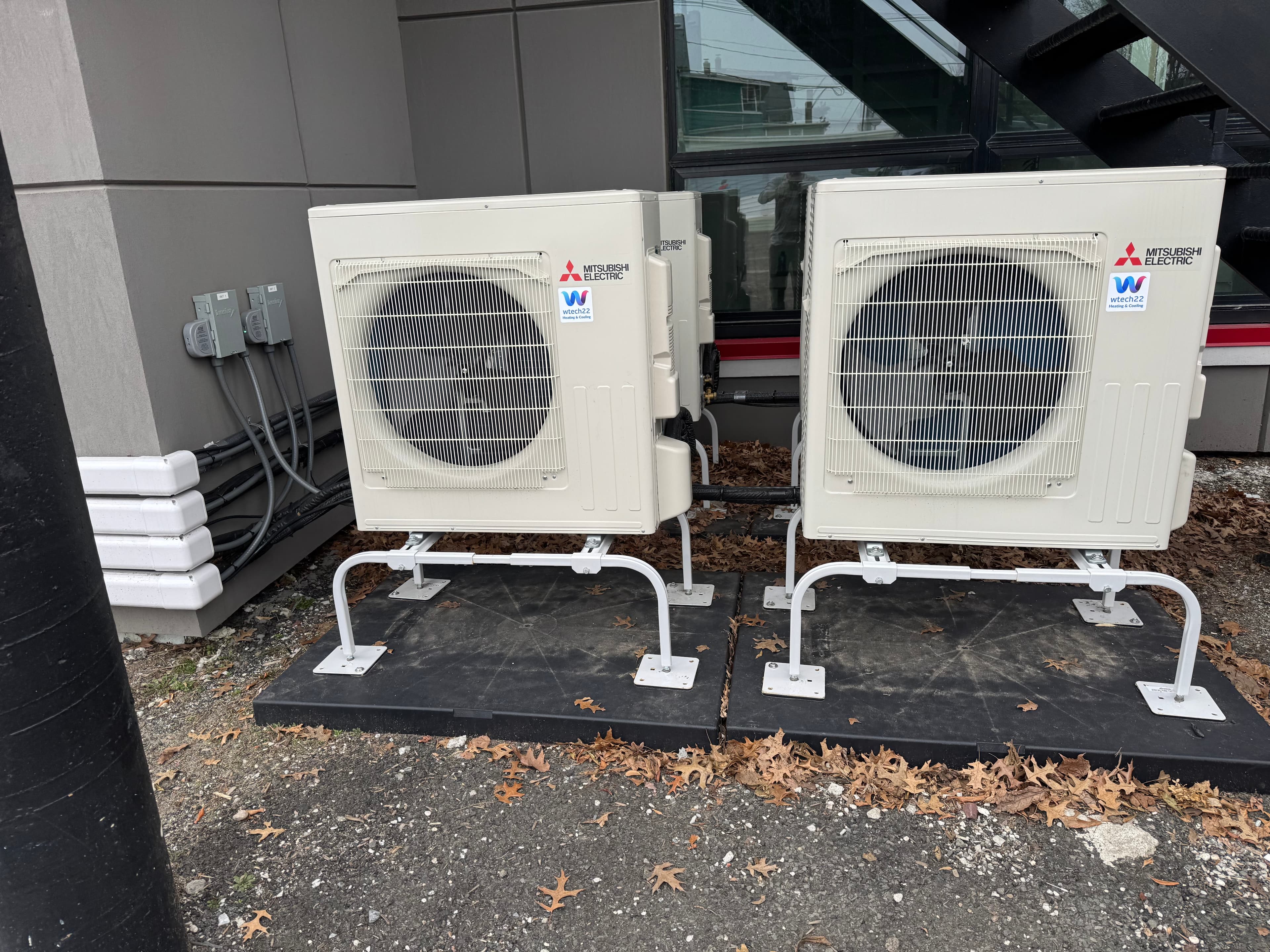
Mitsubishi Dual-Outdoor System for Higher-Demand Connecticut Homes
Dual-outdoor layouts are common in larger or multi-zone projects where spacing, electrical planning, and standard-heat versus Hyper-Heat strategy all need to align before final permitting.
Connecticut Heat Pump Rebate FAQ (2026)
What CT rebate for a heat pump can I get in 2026?
As of September 4, 2026, current Energize CT pages list an Energy Optimization path starting at $1,500 per ton, up to $10,000 for qualifying installations occurring on or after September 1, 2026. Other air-source scenarios are commonly listed at $250 per ton, up to $2,500.
Does the federal 25C credit still apply to 2026 Connecticut installs?
Generally no for 2026 placed-in-service projects. Federal Section 25C applied to qualifying property placed in service through December 31, 2025.
Can I still get a rebate if I am replacing an existing heat pump?
Often yes through the Residential Air Source path, commonly listed at $250 per ton up to $2,500 for qualifying scenarios.
What is the fastest way to avoid missing a rebate in CT?
Complete rebate registration and approval before installation, confirm qualified equipment, and keep invoice and AHRI details complete from day one.
Is pre-verification required for the Smart-E heat pump financing offer?
Energize CT and Smart-E guidance say pre-verification or rebate approval is required when using the Smart-E special heat pump financing offer, even when pre-verification is optional for the rebate itself.
Why do some Connecticut heat pump rebate pages still say $1,000 per ton?
Some older guides and program text can lag current offer summaries. As of September 4, 2026, the live Energize CT Energy Optimization offer summary lists installations occurring on or after September 1, 2026 as eligible for starting incentives at $1,500 per ton up to $10,000, so homeowners should verify the current program page and reservation details before signing.
Primary 2026 references
See your exact CT rebate path in under 2 minutes
Use the CT Upgrade + Rebate Finder to estimate likely incentives by fuel type, utility path, and home profile, then move into contractor planning with confidence.